Agriculture sabotage: The Israeli war on food security in Lebanon
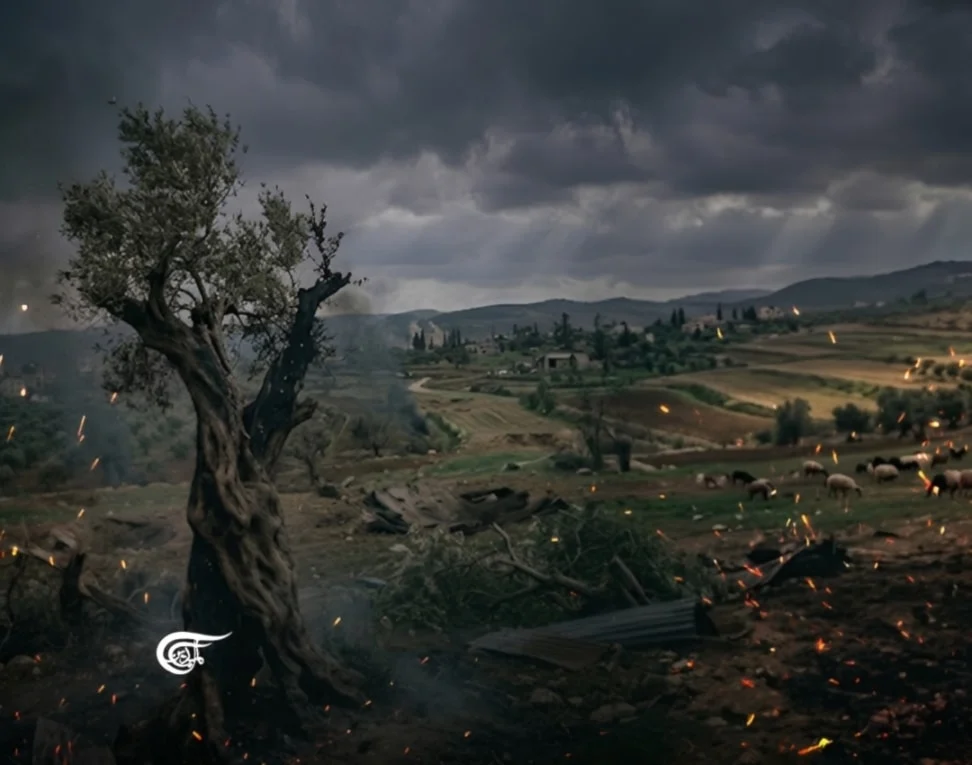
South Lebanon and the Bekaa Valley are the backbone of the agriculture sector in Lebanon. Making up more than 65% of Lebanon’s total agricultural land, they have become the foundation of life and rural continuity for the country, as local communities depend heavily on olive groves, tobacco cultivation, livestock production, poultry farming, and seasonal harvests for both income and food security. For many Lebanese villages, farming is not merely an occupation but a central component of local identity.
Since October 2023, reports from local municipalities, humanitarian organizations, journalists, and international agencies have documented repeated Israeli destruction of farmlands, livestock facilities, irrigation systems, and agricultural infrastructure, threatening the viability of the farming communities.
Approximately one-third of the South and the Bekaa Valley is now inaccessible farmland, as they are contaminated with white phosphorus and heavy metals, and this damage will last for decades to come. Olive groves and tobacco fields have been burned, farmers have been prevented from accessing their land due to ongoing bombardment, and livestock production has been severely disrupted by attacks on barns, cow sheds, and poultry facilities.
The destruction of agricultural systems during wars carries consequences that extend far beyond material losses. Damage to food production undermines local food security, weakens rural economies, accelerates displacement, and threatens the long-term sustainability of civilian life in war-affected areas. Beyond the immediate physical destruction, these Israeli attacks have created long-term economic and environmental consequences for communities already facing severe financial instability amid Lebanon’s ongoing economic crisis. As domestic production declines, food prices rise further, and dependence on imported food will increase, further exacerbating the cost of living.
Why target agriculture?
According to the latest report published by the Lebanese Ministry of Agriculture, around 56,264 hectares of agricultural land in Lebanon have been damaged as a result of the Israeli aggression. In the South, 18,559 were damaged, accounting for 22.5 of the total damaged land.
Damage from Israeli bombardment and shelling has impacted 64 southern towns, as per the report. Small-scale farmers were hit the hardest, with small holdings accounting for nearly 80% of total agricultural properties in the South. 77.9% of southern farmers remain displaced from their lands due to Israeli threats.
Abdallah Nassereddine, former advisor to the Lebanese Minister of Agriculture, pointed out to Al Mayadeen English the real objective behind the Israeli attacks on the agricultural sector.
“Since the first day of the aggression, the Israeli enemy has adopted a scorched-earth policy, targeting forests and agricultural crops in more than 55 southern towns using internationally banned phosphorus shells.,” he said. “The occupation administration justified these attacks by claiming that the Resistance was using the vegetation cover and forests stretching from al-Labbouneh in the west to the Shebaa Farms in the east to carry out operations.”
However, Nassereddine explained, the real objective goes beyond the direct military dimension and targets the foundations of the economic and social resilience of the people of southern Lebanon. Agriculture is not merely a productive sector; it is the primary source of income for tens of thousands of families and a symbol of people’s attachment to their land. Therefore, targeting the agricultural sector aims to:
- Dry up sources of income and deprive farmers of their primary livelihood.
- Force residents into displacement and obstruct their return.
- Destroy the agricultural environment and weaken production capacity for many years.
- Inflict major economic losses on local markets and supply chains.
“In other words, targeting agriculture is a direct attack on the resilience of the people of southern Lebanon and their right to remain on their land,” he said.
All signs of life under attack
The report by the Agriculture Ministry further notes that over a record number of 1,848,856 chickens, sheep, goats, and cows have perished, over 29,000 beehives have been destroyed, and around 2,030 tons of fish have been lost in aquaculture.
Nassereddine said the targeting of livestock farms and feed factories in southern Lebanon is part of a systematic strategy aimed at destroying the foundations of life in the region. “The Israeli occupation understands that agriculture plays a central role in securing food supplies and sustaining local communities.”
He explained that livestock production provides a stable source of income for thousands of families, while the availability of feed remains essential for maintaining animal production. According to him, attacks on these facilities “are designed to eliminate local self-sufficiency and financially exhaust farmers already struggling under the effects of war and displacement.”
He further noted that the destruction of farms and agricultural infrastructure is intended to prevent the rapid recovery of agricultural activity and create economic conditions that discourage displaced residents from returning to their villages.
“The ultimate goal is to turn the land into an uninhabitable area.”
Systematic aggression on farmers' livelihood
The Lebanese Ministry of Agriculture estimated that the Israeli aggression has caused extensive damage to fruit-bearing trees across southern Lebanon, particularly olive groves, since the start of the aggression.
According to the ministry, around 6,600 hectares of olive trees and 11,075 hectares of other fruit-bearing trees have been damaged since the start of the aggression. The destruction includes more than 50,000 centuries-old olive trees, leading to a sharp decline in olive oil production, negatively impacting farmers, olive presses, traders, and both local and foreign markets.
Nassereddine explained that thousands of hectares of forests and orchards in al-Labbouneh, Alma al-Shaab, Bint Jbeil, Mays al-Jabal, Khiam, al-Taybeh, Marjayoun, and Hasbaya were burned and destroyed. He noted that these areas are among Lebanon’s most important agricultural centers, contributing more than 20% of the country’s agricultural production, particularly in olives and olive oil, citrus fruits, tobacco, and seasonal vegetables.
He further pointed to the impact of forced displacement, saying thousands of farmers were compelled to abandon their land, halting harvesting, irrigation, pruning, and maintenance operations. He stressed that this "deepened losses even in areas that were not directly struck."
The economic consequences, he said, extended beyond farmers to include traders, exporters, olive presses, packaging factories, transportation and storage sectors, as well as seasonal agricultural workers.
“As a result, the aggression targeted not only farmers, but the entire agricultural production and marketing chain,” Nassereddine said.
Nassereddine further states that rehabilitating damaged agricultural land may take anywhere from one growing season to several years, while recovering losses of fruit-bearing trees is expected to take significantly longer, as many trees require years before returning to full productivity.
Acute food insecurity
According to the latest Integrated Food Security Phase Classification (IPC) analysis released by Lebanon’s Ministry of Agriculture in cooperation with the UN Food and Agriculture Organization (FAO) and the World Food Programme (WFP), Lebanon is facing a renewed food security crisis as the ongoing Israeli escalation, economic collapse, and displacement reverse months of fragile recovery.
The report paints a stark picture of a country sliding deeper into humanitarian distress, with 1.24 million people, nearly one in four among the population analyzed, expected to experience acute food insecurity classified as Crisis (IPC Phase 3) or worse between April and August 2026.
The figures represent a dramatic deterioration compared to the previous assessment, covering November 2025 through March 2026, when approximately 874,000 people, or 17% of the analyzed population, were classified as acutely food insecure.
The worsening conditions reflect the cumulative impact of the Israeli aggression on Lebanon, mass displacement, inflation, agricultural disruption, and shrinking humanitarian assistance, all of which are converging to intensify pressure on households already struggling after years of economic collapse.
Fragile gains swiftly reversed
Humanitarian agencies warned that the latest deterioration confirms how vulnerable Lebanon’s food systems remain to political and military shocks.
“The fragility we warned about in the previous IPC analysis has unfortunately proven to be true,” said Allison Oman Lawi, WFP representative and country director in Lebanon.
“Hard won gains have been swiftly reversed. Families who were just managing to cope are now being pushed back into crisis as conflict, displacement and rising costs collide, making food increasingly unaffordable,” she added.
FAO Representative in Lebanon Nora Ourabah Haddad similarly warned that the crisis reflects “continued and deepening fragility in rural and agrifood systems,” stressing that compounded shocks are undermining agricultural livelihoods and worsening food insecurity.
Lebanese Agriculture Minister Nizar Hani said the results underscore the gravity of the current moment, where war and economic pressures intersect to place national food security under “critical risk.”
“We reaffirm our commitment to adopting a sustainable, science-based approach that goes beyond merely monitoring crises, by responding to them through continuous policies and programmes that strengthen the resilience of the agricultural sector and protect farmers’ livelihoods,” Hani said.
He also called for a more proactive international approach to the crisis, emphasizing that safeguarding food security in Lebanon is both a national and international responsibility.
Agriculture devastated by war and displacement
Agricultural production has yet to recover from the 2024 Israeli aggression, with farmland destruction, displacement of farming families, restricted access to agricultural areas, soaring production costs, and persistent insecurity all constraining output.
The situation is becoming more urgent as the spring planting season closes, raising fears that missed planting windows could trigger additional production losses and deepen humanitarian needs later this year.
Livestock and poultry sectors are also under mounting strain due to disrupted veterinary services, restricted movement, and deteriorating access to markets and supplies.
War-hit southern districts have experienced the sharpest deterioration. The IPC analysis identified Bint Jbeil, Marjayoun,Tyre, and Nabatieh as among the hardest-hit areas, followed by Baalbek-Hermel, where displacement and market disruptions have become increasingly severe.
Inflation pressures households
The IPC analysis found that 725,000 Lebanese citizens, around 19% of Lebanese households assessed, are projected to face Crisis-level food insecurity or worse.
The situation is even more difficult among refugee populations. Approximately 362,000 Syrian refugees, representing 36% of the refugee population assessed, are expected to face acute food insecurity, while 104,000 Palestinian refugees, or 45%, are classified in Crisis or worse conditions.
Among Syrians who arrived in Lebanon after 2024, the crisis is particularly acute, with roughly 52% projected to face severe food insecurity.
The report warns that households are increasingly unable to consistently secure basic food needs and are resorting to harmful coping mechanisms to survive.
These measures include reducing meal portions, skipping meals entirely, taking on debt, and selling essential assets. The IPC also cautioned that the current analysis may not yet fully capture the long-term impact of the latest Israeli escalation and broader regional war, meaning actual conditions could deteriorate further if fighting persists or intensifies.
Humanitarian agencies stressed that urgent and sustained assistance will be necessary to prevent a deeper collapse in food security and livelihoods across Lebanon in the coming months.
Compiled and ongoing list of reported agriecocide:
Livestock
- 05/10/2026: An Israeli drone targeted a poultry feed factory in the town of al-Ramadiyah in southern Lebanon’s Tyre district, leaving several wounded.
- 01/19/2026: An Israeli tank fired near a herd of livestock in the Sarda farm.
- 01/05/2026: An Israeli drone targeted a chicken coop near a house in Khiam.
- 03/14/2025: The occupation forces opened fire on a herd of livestock on the western outskirts of al-Wazzani, killing a number of them.
- 07/08/2024: Seven hundred sheep were killed in the Israeli airstrike on Mount Tura.
- 05/16/2024: Two livestock herders were injured in the Israeli shelling of the Marjayoun plain.
- 05/04/2024: Israeli fire was directed at a livestock herder in al-Wazzani
- 01/08/2024: Artillery shelling targeted a livestock farm on the outskirts of Al-Wazzani.
- 12/01/2023: Israeli forces opened fire on goat herders in Shebaa.
- 10/21/2023: A shell landed on a goat farm in Wadi Khansa, in the outskirts of the town of Al-Mari, killing a number of goats.
- 05/27/2022: The Israeli forces stole 250 goats belonging to a Lebanese shepherd, while they were grazing between ‘Birkat Baathil’ and ‘Bab Hassan’ in Lebanese territory in the Kfar Chouba heights in Hasbaya District, and led them behind their military position in al-Sammaqa.
Water systems
- 04/27/2026: Israeli forces bulldozed solar panels in Debel, southern Lebanon, cutting power to homes and disrupting the town’s water supply. The damage also hit houses, roads, and olive groves, worsening conditions for residents
- 04/03/2026: South Lebanon Water Establishment (SLWE) reported that Israeli attacks the Ibl Al-Saqi and al-Maysat stations, causing severe damage to both. The solar power systems at the al-Zahiriya station in Qanarit were also damaged, as well as the solar panels at Eastern Well No. 1
- 01/30/2026: SLWE reports in the Teffahta area: “Water supply has decreased due to damage to the service line caused by the airstrikes.”
- 01/23/2026: SLWE reports that the al-Zahiriya station was damaged in the airstrike on Qanarit
- 10/17/2025: SLWE reported that the Israeli aggression destroyed the institution’s strategic fuel storage facility
- 09/29/2025: An Israeli airstrike targeted a water tanker on the road to the town of Nabatieh al-fawqa
- 09/19/2025: Local reports documented the Israeli targeting of a water tanker in the Hounin neighborhood
- 12/06/2024: An Israeli drone exploded in a water tank in the town of Majdal Zoun
- 10/25/2024: An appeal for help was sent from the villages of Arkoub to repair the main drinking water line after it was damaged by shelling
- 09/30/2024: An Israeli artillery shell landed near the water tank belonging to the village of Sarda
- 02/07/2024: An Israeli airstrike at dawn targeted al-Wazzani water pumping station
- 12/27/2023: NNA reported that the house in Tayr Harfa targeted by Israeli forces contains a drinking water purification station that caught fire.
- 12/19/2023: The occupation artillery shelled the area surrounding the Rubb al-Thalathin water tank.
- 10/11/2023: SLWE reports that the Israeli targeting of the water tank in the town of Yarin is considered a blatant violation of international laws and conventions.
Olive groves
- 10/28/2025: Israeli bombs were fired toward civilians while they were inspecting olive groves on the outskirts of Maroun al-Ras.
- 10/17/2025: Israeli fire was directed at a group harvesting olives in the al-Anq area of the town of Aitaroun.
- 10/16/2025: An Israeli bomb struck the outskirts of Blida while residents were harvesting the olive season.
- 10/14/2025: Four Israeli Merkava tanks were observed at the Jal al-Deir and al-Malikiya while residents of Aitaroun were heading to the olive groves.
- 09/23/2025: Israeli bombs set fire to olive groves in Aita al-Shaab.
- 12/08/2024: The IOF abducted two Lebanese citizens while they were harvesting olives in the Majidiya farm near the Shebaa Farms.
- 11/29/2024: The IOF bulldozed and uprooted olive trees near the al-Abbara area opposite the wall in the town of Kfar Kila.
- 11/09/2024: A civilian was injured while harvesting olives on the outskirts of Rmeish after the IOF deliberately fired artillery shells near him.
- 11/07/2024: An Israeli airstrike hit Yuhmor al-Shaqif, accompanied by cluster bomb shelling of its olive groves and agricultural fields.
- 11/06/2024: Israeli occupation forces fired phosphorus shells at olive groves in Yuhmar al-Shaqif.
- 10/31/2024: An Israeli airstrike targeted an olive grove in Loubiyeh.
- 10/24/2024: A large fire broke out in olive orchards between Burj al-Muluk and Tal al-Nahas as a result of Israeli shelling.
- 10/22/2024: Israeli bombs were dropped on olive orchards in Jdeidet Marjayoun.
- 10/21/2024: An Israeli unmanned drone targeted an olive pomace collection facility in Ansar.
- 10/21/2024: The Israeli occupation burned olive groves on the outskirts of the towns of Aita al-Shaab and Rmeish
- 08/28/2024: Israeli artillery shelling sparked fires in olive groves and agricultural areas in al-Jibbin and the Tayr Harfa triangle.
- 07/23/2024: IOF hit olive groves in the town of Blida with heavy machine guns.
- 07/11/2024: Shelling targeted the outskirts of Naqoura, Alma al-Shaab, and al-Batishiyeh in the outskirts of the town of Dahayra, causing fires to break out in forests and olive orchards.
- 01/16/2024: Israeli artillery shelling targeted olive groves in the vicinity of the al-Abbara area in Kfar Kila.
- 01/02/2024: Israeli artillery targeted olive orchards in al-Wazzani.
- 12/19/2023: Israeli artillery shelled a house in Mays al-Jabal and olive orchards between Deir Mimas and Kfar Kila.
- 12/01/2023: Israeli shelling with phosphorus munitions targeted olive groves adjacent to Kfar Kila.
- 11/08/2023: Lebanese News Agency reported Israeli shelling on the olive groves in the area between Blida and Halta Farm and Salamieh in southern Lebanon.
- 10/30/2023: Israeli forces targeted olive groves between Kfar Kila and Deir Mimas with incendiary shells and shelled al-Labbouneh and Chihine.
- 10/29/2023: Twenty dunams of olive trees, along with a transformer and a power generator, were burned as a result of Israeli shelling on Wadi Khansa.